 6 ch.
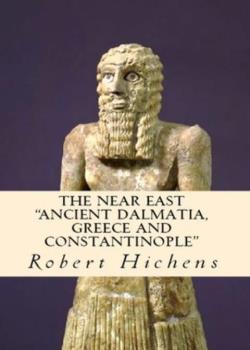
The Near East / Dalmatia, Greece and Constantinople
English · On the rack since
The Near East / Dalmatia, Greece and Constantinople is a novel in English. The chapters are read in the official app.
Keep reading in the official app
- 1 Install the official app from your store.
- 2 Open it and search for The Near East / Dalmatia, Greece and Constantinople.
From the back cover
What is the magic of pastoral Greece? What is it that gives to you a sensation of being gently released from the cares of life and the boredom of modern civilization, with its often unmeaning complications, its unnecessary luxuries, its noisy self-satisfactions? This is not the tremendous, the spectacular release of the desert, an almost savage tearing away of bonds. Nothing in the Greece I saw is savage; scarcely anything is spectacular. But, oh, the bright simplicity of the life and the country along the way to Marathon! It was like an early world. One looked, and longed to live in those happy woods like the Turkish Gipsies. Could life offer anything better? The pines are small, exquisitely shaped, with foliage that looks almost as if it had been deftly arranged by a consummate artist. They curl over the slopes with a lightness almost of foam cresting a wave. Their color is quite lovely. The ancient Egyptians had a love color: well, the little pine-trees of Greece are the color of happiness. You smile involuntarily when you see them. And when, descending among them, you are greeted by the shining of the brilliant-blue sea, which stretches along the edge of the plain of Marathon, you know radiance purged of fierceness.The road winds down among the pines till, at right angles to it, appears another road, or rough track just wide enough for a carriage. This leads to a large mound which bars the way. Upon this mound a habitation was perched. It was raised high above the ground upon a sort of tripod of poles. It had yellow walls of wheat, and a roof and floor of brushwood and maize. A ladder gave access to it, and from it there was a wide outlook over the whole crescent-shaped plain of Marathon. This dwelling belonged to a guardian of the vineyards, and the mound is the tomb of those who died in the great battle.
Contents
Every chapter of this book is read in the official app.
Chapter isn’t on this rack. Open the official app to pick up right there.
Readers also picked
- When the Storm Ends, Life Begins AgainReal Life
 Ch. 1–2 free
- The Time of RosesReal Life
 47 ch.
- After My Husband Queued for Couple's Ice Cream With Stepsister, I DivorcedBillionaire
 Ch. 1–2 free
- Midnight Confessions:Forbidden Fantasies14 ch.Midnight Confessions:Forbidden FantasiesReal Life
- Apocalypse My Useless Skill Became S-RankReal Life
 57 ch.
- Hemlock and RosesReal Life
 26 ch.
- Unwanted Baby10 ch.Unwanted BabyReal Life
- Heal Me Anyway16 ch.Heal Me AnywayReal Life
- THE FIFTY YEAR BARGAIN10 ch.THE FIFTY YEAR BARGAINReal Life
- Your Lie Cost You MeReal Life
 Ch. 1–2 free
Questions at the counter
Where can I read The Near East / Dalmatia, Greece and Constantinople?
In the official app. The buttons on this page take you there.
What is The Near East / Dalmatia, Greece and Constantinople about?
What is the magic of pastoral Greece? What is it that gives to you a sensation of being gently released from the cares of life and the boredom of modern civilization, with its often unmeaning complications, its unnecessary luxuries, its noisy self-satisfactions? This is not the tremendous, the spectacular release of the desert, an almost savage tearing away of bonds. Nothing in the Greece I saw is savage; scarcely anything is spectacular. But, oh, the bright simplicity of the life and the country along the way to Marathon! It was like an early world. One looked, and longed to live in those happy woods like the Turkish Gipsies. Could life offer anything better? The pines are small, exquisitely shaped, with foliage that looks almost as if it had been deftly arranged by a consummate artist. They curl over the slopes with a lightness almost of foam cresting a wave. Their color is quite lovely. The ancient Egyptians had a love color: well, the little pine-trees of Greece are the color of happiness. You smile involuntarily when you see them. And when, descending among them, you are greeted by the shining of the brilliant-blue sea, which stretches along the edge of the plain of Marathon, you know radiance purged of fierceness.The road winds down among the pines till, at right angles to it, appears another road, or rough track just wide enough for a carriage. This leads to a large mound which bars the way. Upon this mound a habitation was perched. It was raised high above the ground upon a sort of tripod of poles. It had yellow walls of wheat, and a roof and floor of brushwood and maize. A ladder gave access to it, and from it there was a wide outlook over the whole crescent-shaped plain of Marathon. This dwelling belonged to a guardian of the vineyards, and the mound is the tomb of those who died in the great battle.
We only stock the preview chapters and book details the publisher lets us show. The complete book is sold and read in the official app.